
Gas detector calibration in Malaysia for portable units
Portable detectors adjusted against known gas on the bench, with a dated certificate per unit.
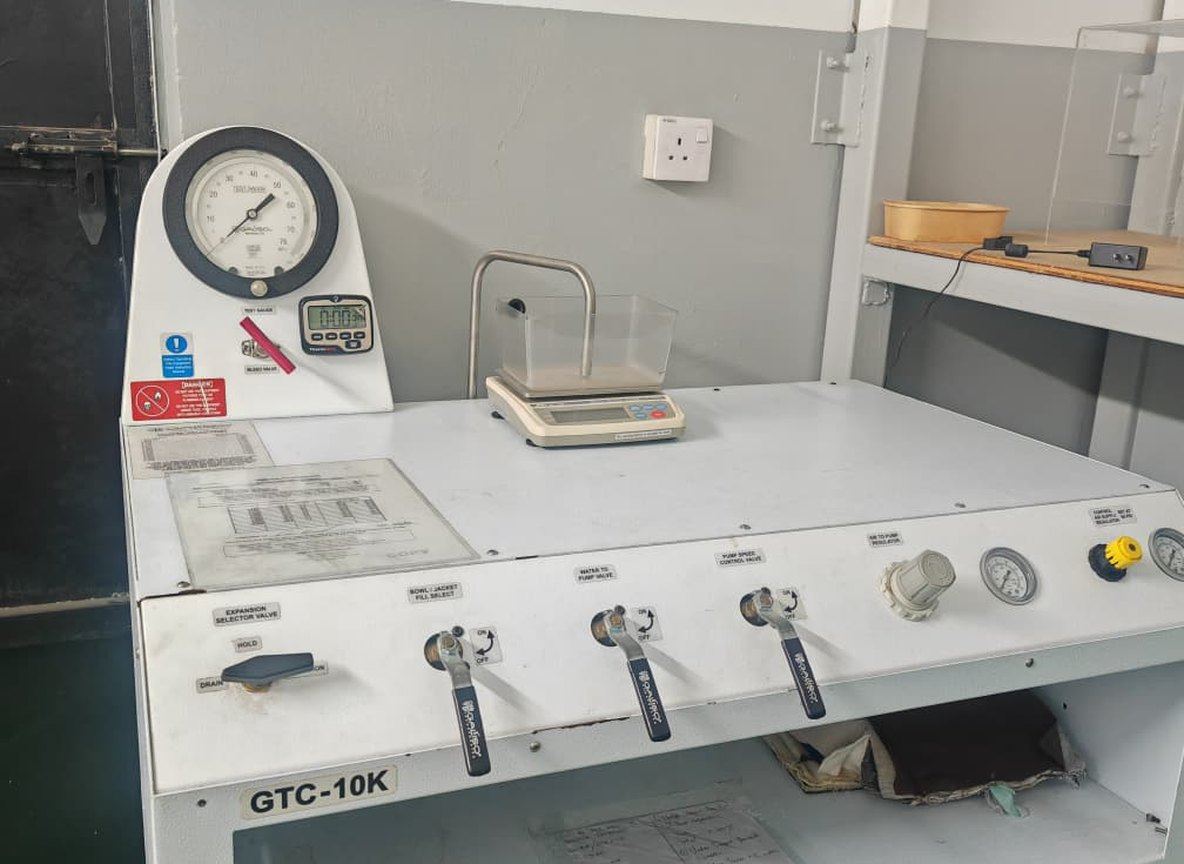
TopBorneo calibrates portable gas detectors on a test bench in its workshop, and takes units in at the Labuan office as well.
A calibration adjusts each sensor against gas of a known concentration, so the reading is correct again. Every unit leaves the bench with a dated calibration certificate.
Any make, calibrated in our own workshop
When is your gas detector due for calibration?
Enter the date of the last calibration. You get the next due date and the bump test MSA recommends in between. The dates are worked out in your browser.
Select a detector and a date to see the due date.
Sticker faded or certificate lost?
Send us the serial number and the model. We check our records for that unit and come back to you, and we can calibrate it again and put it back on a dated certificate.
Why work with TopBorneo
Tell us the job, the site and the crew. We work out what fits instead of sending a catalogue back.
MSA, KStrong and Bullard straight from an official distributor, with lighter lines alongside them.
Gas detectors, breathing apparatus and cylinders are serviced by our own technicians.
The same people handle your enquiry, your order and your servicing.
Read more
Open a section to read the detail behind it.
Bump test, calibration and the log in between
Three words get mixed up, and getting that wrong costs money: a detector that is only bump tested can drift for months without anyone noticing.
A bump test is a short check with real gas. It is like holding a lit match under a smoke alarm instead of pressing its test button. The button only proves that the electronics and the sounder work. The gas proves that the sensor itself still responds.
A detector passes a bump test when it alarms and reads within the maker's tolerance of the gas it was given. A unit that alarms but reads well under the applied concentration has failed. For the combustible sensor of the ALTAIR 4XR, MSA puts that tolerance at 0 to plus 20 percent of the applied concentration. A unit outside it has to be calibrated before it goes back to work.
| Who does it | How often | What is recorded | |
|---|---|---|---|
| Bump test | Your own crew, on site | MSA recommends before each day's use | Pass or fail plus the reading, in your own log |
| Calibration | TopBorneo, in the workshop | See the interval below | A dated calibration certificate |
| Calibration log | Your safety officer | Continuously | Which unit was done when, and when it is due again |
An auditor asks for the log first and the certificates second. Keep them in the same place.
How often a portable detector should be calibrated
The interval comes from the maker of your detector, not from TopBorneo. For MSA detectors it reads as follows.
| Situation | What MSA says |
|---|---|
| Detectors with standard XCell sensors | MSA recommends calibration at a maximum interval of six months |
| Before each day's use | Bump test |
| After a failed bump test | Calibrate immediately, before further use |
Note the word recommends. Malaysia's code for confined space work points to the interval the maker recommends, so what binds you in practice is your own procedure and your client's contract. On high risk sites in Malaysia a quarterly interval is common. If you run detectors of another make, take the interval from that maker's manual, because it is not always six months.
What happens to a unit on the bench
- Send TopBorneo the make, model and serial numbers first. That decides which sensors and which test stand your units need, before anything leaves your site.
- Each detector is zeroed on air of a known composition, from a cylinder of zero air. The air in a workshop is not clean enough to use as a zero.
- Each sensor is then given gas of a known concentration and read before anything is adjusted. That first reading is the as found value.
- The unit is adjusted until every channel matches the concentration it is given. The reading after adjustment is recorded next to the as found one.
- Any sensor that no longer holds calibration is reported to you with a quotation. Nothing is replaced before you agree to it.
- The unit goes back with a dated calibration certificate.
The as found reading is what matters afterwards. It shows whether the readings your crew took over the past six months can be relied on.
Calibration gas, and what a reading traces back to
A calibration is only as good as the gas used for it. Cylinders of calibration gas carry a concentration, a mixture and an expiry date, and gas past that date can push a sensor the wrong way. TopBorneo calibrates from cylinder gas of a stated concentration.
MSA calls a successful calibration the adjustment of the sensor output to match the concentration of a known traceable calibration cylinder. The cylinder is the reference, so its own certificate is what your reading traces back to. Say in your enquiry if your procedure asks for that document, and TopBorneo confirms with the quotation what comes back.
Which detectors this bench takes
The automated test bench in Kota Kinabalu is the MSA GALAXY GX2. It is built by MSA for its own portable detectors, and its test stands are model specific. Detectors from the MSA ALTAIR family go straight on it. What the 4XR and the 5X need in particular is on the ALTAIR 4XR and 5X servicing page.
For a detector of another make it depends on the model, on the gas it needs and on the parts its maker releases. Send the make, model and serial number, and TopBorneo comes back per unit with what it can do. One email can save you a shipment.
TopBorneo services MSA portable gas detection equipment as an authorised MSA service centre.
Keep a permit moving while units are away
TopBorneo also rents out gas detectors, so a calibration date does not have to stop confined space work. See gas detector rental, or the gas detection page for detectors to buy.
Where to send your equipment
Drop your equipment at either address, or ask us to collect it.
| Location | Address | Phone |
|---|---|---|
| Kota Kinabalu | Lot No 8, Lean Seng Industrial, Jln Undan, 88450 Kota Kinabalu, Sabah | 088-422 259 |
| Labuan office | Unit No. 3A-3, Level 3A, Labuan Times Square, Jln Merdeka, Bandar Labuan, 87000 W.P, Labuan Federal Territory | 087-462 259 |
Check when your detectors are due
MSA recommends a maximum interval of six months for detectors with standard XCell sensors, counted from the date on the last calibration certificate. Send the make, model and serial numbers to crm@topborneo.com or on WhatsApp to book the work. If that certificate is gone, send the serial numbers anyway and TopBorneo looks up when those units were last in the workshop.
Common questions
What is gas detector calibration?
Gas detector calibration is the adjustment of a detector against gas of a known concentration, so that its reading is correct again. Sensors drift as they age, and a drifting detector looks and sounds normal. TopBorneo calibrates portable detectors in its workshop and issues a dated certificate for each unit.
How do you calibrate a gas detector?
The detector is first zeroed on air of a known composition from a cylinder, then given gas of a known concentration on each channel. Every sensor is read before adjustment, and that as found reading is recorded. TopBorneo does this on an automated bench.
How long is a gas detector calibration valid?
A calibration certificate does not expire by itself. The next date follows from the interval you apply, and that interval comes from the maker of your detector. MSA recommends a maximum interval of six months for detectors with standard XCell sensors. TopBorneo dates every certificate it issues.
What about a detector of another make?
Send the make, model and serial number. The MSA bench in Kota Kinabalu has test stands built for MSA portable detectors, so for another make the answer follows the model, the gas it needs and the parts its maker releases, and TopBorneo comes back on it before you ship anything.
Does a calibration come with a certificate?
Yes. Every unit that leaves the TopBorneo bench goes back with a dated calibration certificate. What such a certificate should state, and how it is used in a permit file, is set out on the calibration certificates page.
Send your serial numbers
Email the make, model and serial numbers of your detectors to crm@topborneo.com, or send them on WhatsApp. The Labuan number is +60 10 959 0259 and the Kota Kinabalu number is +60 16 775 0259. TopBorneo replies with the work each unit needs, the documents that come back with it, and a quotation.