
Safety harness and fall arrest inspection in Malaysia
Harnesses, lanyards, blocks and anchors inspected on site or in the workshop, result on paper.
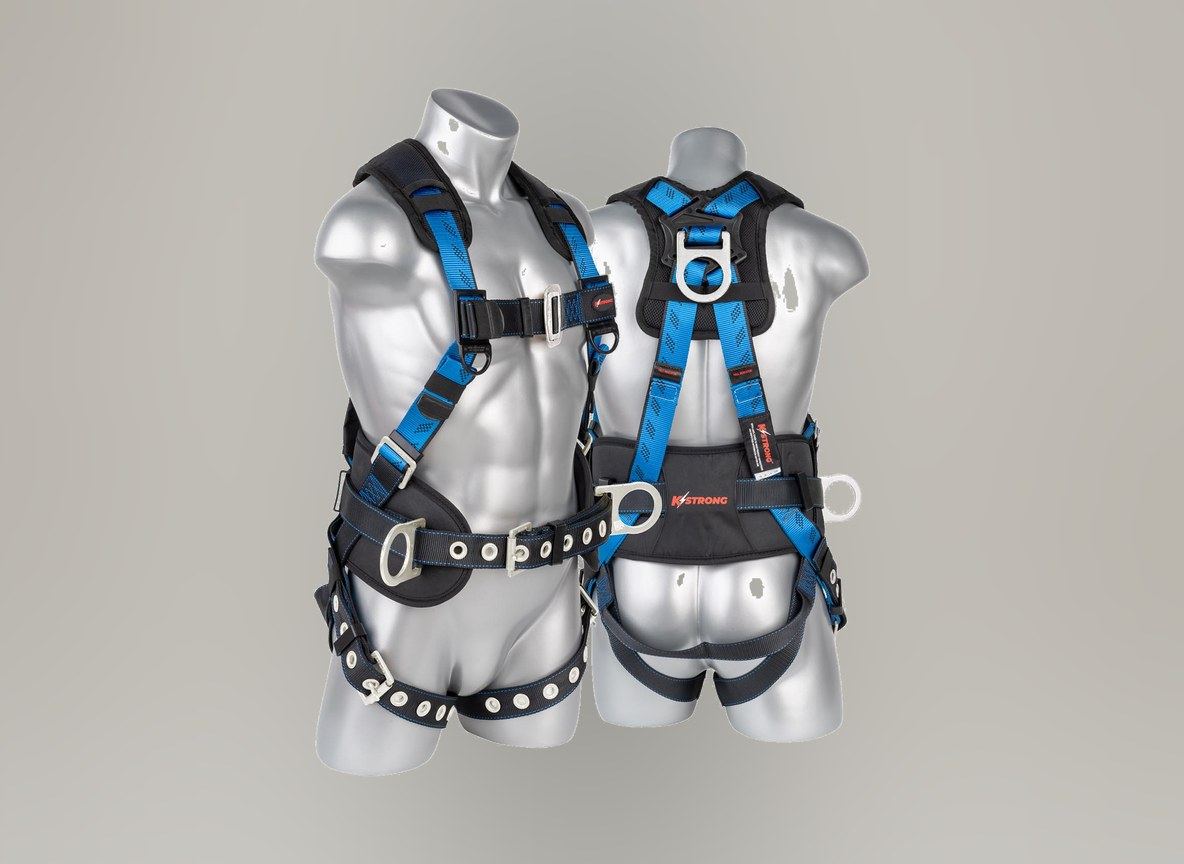
TopBorneo inspects harnesses, lanyards, fall arrest blocks and anchor devices.
Each item is checked against the manufacturer's criteria and the result goes on paper. Equipment that fails goes out of service immediately.
Inspected against the manufacturer's criteria
Why work with TopBorneo
Tell us the job, the site and the crew. We work out what fits instead of sending a catalogue back.
MSA, KStrong and Bullard straight from an official distributor, with lighter lines alongside them.
Gas detectors, breathing apparatus and cylinders are serviced by our own technicians.
The same people handle your enquiry, your order and your servicing.
Read more
Open a section to read the detail behind it.
How often a harness has to be inspected
Four things set your interval. Work down the list and take the shortest one that applies.
| What sets it | What it says |
|---|---|
| The manufacturer's manual for that model | The starting point. Follow the interval printed for your harness, not a number copied from another supplier |
| EN 365 and ANSI Z359 | Both put a floor under it. EN 365 asks for a periodic examination at least every twelve months, by a competent person. ANSI Z359.2 asks for a formal inspection at least once a year, by a competent person other than the user |
| How the equipment is used | Heavy use, heat, chemicals or abrasion justify a shorter interval than the manual assumes |
| Your own procedure and your client's contract | On oil, gas and marine sites the contract is often the strictest of the four |
Twelve months is the floor both standards set, and it is what a client auditor expects to see in the file. Where the manual for your model or the way the equipment is used calls for a shorter interval, that shorter interval is the one that counts.
Malaysia does not set one period that covers every harness on every site. What a Malaysian auditor reads for work at height is the DOSH Guidelines for the Prevention of Falls at Workplaces 2007. Those guidelines deal with fall arrest, work restraint and risk assessment, and not with a single inspection date. What has to be in place before anyone goes up is described under working at height requirements and in the page on the HIRARC risk assessment.
Two different checks, and only one of them is an inspection
| Pre-use check | Periodic inspection | |
|---|---|---|
| Who does it | The person wearing the harness | A competent person |
| When | Every time, before putting it on | At the interval set out above |
| What it covers | Webbing, stitching, buckles and the label, by eye and by hand | The full item against the manufacturer's criteria, including the parts a wearer cannot judge |
| What you get | Nothing on paper. Wear it or reject it | A written outcome per item, pass or fail |
A pre-use check does not replace an inspection, and an inspection does not replace the pre-use check.
A harness that has arrested a fall does not go back on
Once fall arrest equipment has taken a fall, it goes out of service immediately. A harness absorbs one fall. Replace it after that fall. Damage to webbing and to energy absorbers is not always visible, so nothing about a clean-looking harness proves it is still safe. Take it out of the store, label it, and replace it.
The same goes for equipment with an unreadable label. If nobody can read the model and the date, nobody can prove which criteria apply to it.
What TopBorneo checks, and what you get back
TopBorneo is an official distributor of MSA and KStrong fall protection equipment. An inspection covers harnesses, lanyards and energy absorbers, self retracting lifelines, anchor devices and connectors.
Per item you get the outcome in writing: it stays in service, it needs a part replaced, or it comes out of use. Items that fail are reported to you with a quotation for replacement, and nothing is replaced before you agree to it.
Recertification: what an inspection settles
Recertification is the word makers use for putting equipment back in service with a new date on it. What that takes is not the same for every item, and that is where the cost sits.
| Item | What the inspection covers | What it does not settle |
|---|---|---|
| Harness, lanyard, energy absorber | The complete item against the maker's criteria: webbing, stitching, buckles, D rings, the energy absorber and the label | For these items the inspection is the whole job |
| Self retracting lifeline, fall arrest block | The housing, the lifeline, the hook, and whether the unit locks and retracts as it should | The brake, the spring and the energy absorber sit sealed inside the housing. Makers set their own interval for opening a unit, in their own workshop or one they approve |
| Anchor device | A portable or removable anchor against the maker's criteria | An anchor built into a structure is a structural judgement, and some designs need a proof load test. That is a separate job from this inspection |
Send the maker and the type with your list. TopBorneo replies per item with what it inspects and which units need something an inspection does not settle, before anything leaves your store.
Looking for the equipment itself rather than the inspection? The range sits on the fall protection page. For the paperwork side of servicing, see calibration certificates, which explains what each type of document does and does not say. For what a building site needs beyond the inspection, see construction safety equipment.
Where to send your equipment
Say where your equipment is when you send your list, and TopBorneo comes back on how the inspection is arranged.
| Location | Address | Phone |
|---|---|---|
| Kota Kinabalu | Lot No 8, Lean Seng Industrial, Jln Undan, 88450 Kota Kinabalu, Sabah | 088-422 259 |
| Labuan office | Unit No. 3A-3, Level 3A, Labuan Times Square, Jln Merdeka, Bandar Labuan, 87000 W.P, Labuan Federal Territory | 087-462 259 |
Common questions
Do safety harnesses need to be inspected?
Yes. A harness is checked by the wearer before every use, and inspected periodically by a competent person against the manufacturer's criteria. TopBorneo carries out that periodic inspection across Malaysia. The outcome is reported per item, so a rejected harness goes out of service instead of back into the store.
How often do you inspect a safety harness?
The interval comes from the manual for your model, and EN 365 and ANSI Z359 put a floor under it of twelve months. Heavy use, heat, chemicals or abrasion call for a shorter interval than that, and a client contract can be stricter again. Send the harness list and the interval that applies to your site comes back with the quotation.
Does TopBorneo recertify fall arrest blocks?
A fall arrest block is inspected like any other item: the housing, the lifeline, the hook and whether it locks and retracts. The brake and the energy absorber sit sealed inside, and makers set their own interval for opening the unit. TopBorneo names that in the written outcome per item.
How do you properly inspect a safety harness?
A competent person works through the item against the maker's criteria: webbing and stitching, the energy absorber, buckles and D rings, the label, and the service history. Anything doubtful fails. TopBorneo records the result per item, so the file shows which harness was checked and what was decided.
How much does a safety harness inspection cost?
It is quoted per job, because the cost follows the number of items, their type and whether the inspection is done at your site or in the workshop. Send a list with maker, model and date of first use to crm@topborneo.com and you get a quotation for exactly that list.
Send your equipment list
Email crm@topborneo.com with the maker, model, quantity and date of first use of your harnesses and lanyards. WhatsApp works too. The Labuan number is +60 10 959 0259 and the Kota Kinabalu number is +60 16 775 0259. TopBorneo replies with what can be inspected, where, and what it costs.